
Want to Age Well? Start With These 5 Habits
For years, the conversation around longevity focused on one question: How can we live longer?
Today, the question is changing.
Most people aren't simply interested in adding more years to their lives. They want those years to be healthy, active, independent, and enjoyable. In other words, they're interested in improving their health span, the number of years they can live with energy, vitality, and a high quality of life.
The exciting news is that longevity science has evolved dramatically in recent years. Researchers are learning more about the factors that influence healthy aging, and many of the most effective strategies are surprisingly practical.
While headlines often focus on expensive biohacking technologies or the latest anti-aging supplement, the strongest evidence continues to point toward foundational habits that support the body's ability to thrive over time.
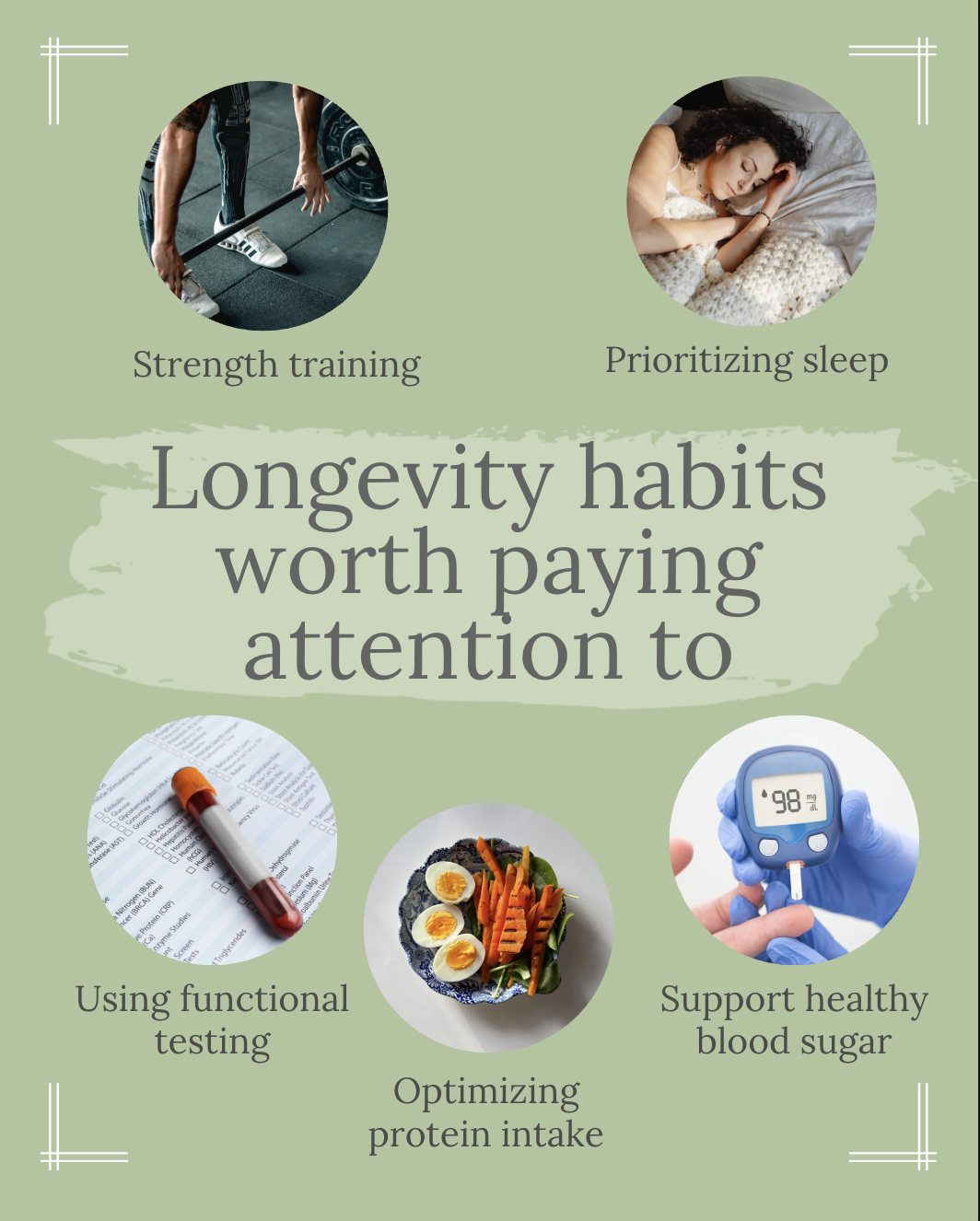
Here are five longevity trends worth paying attention to and why they may have a bigger impact on your future health than you think.
1. Strength Training: The Longevity Superpower
If there is one thing that consistently rises to the top of longevity research, it's strength training. Researchers now recognize that maintaining muscle mass and strength may be one of the most powerful predictors of healthy aging.
Beginning around age 30, adults naturally start losing muscle mass. This process gradually accelerates with age and can contribute to weakness, reduced mobility, slower metabolism, increased fall risk, and loss of independence.
Strength training helps counteract these changes. But the benefits extend far beyond building muscle.
Regular resistance training has been associated with:
Improved insulin sensitivity
Better blood sugar regulation
Increased bone density
Improved balance and coordination
Reduced risk of falls
Enhanced metabolic health
Better cognitive function
Greater physical resilience
Muscle is often viewed simply as tissue that helps us move. In reality, it functions as an important metabolic organ that influences everything from glucose regulation to inflammation.
One of the clearest messages emerging from longevity research is this: maintaining strength is one of the best investments you can make in your future health.
The goal doesn't have to be becoming a competitive athlete. Even two to three strength-training sessions per week can provide significant benefits.
2. Protein Optimization: Giving Your Body the Building Blocks It Needs
As interest in longevity grows, protein has become one of the most discussed topics in nutrition.
For years, many people focused primarily on reducing calories. Today, the conversation is shifting toward ensuring the body receives adequate nutrients to maintain muscle, support recovery, and preserve function as we age.
Protein plays a critical role in:
Muscle maintenance
Tissue repair
Immune function
Hormone production
Healthy aging
One challenge is that protein needs often increase with age.
As we get older, the body becomes less efficient at stimulating muscle protein synthesis, the process responsible for building and maintaining muscle tissue. This means older adults may require more dietary protein to achieve the same effect they experienced when they were younger.
Many adults, particularly those who skip meals or follow restrictive diets, may not consume enough protein to support optimal health.
Rather than concentrating all protein intake at dinner, current research suggests there may be benefits to distributing protein more evenly throughout the day.
For example:
Protein-rich breakfast
Balanced lunch
Protein-containing snacks when appropriate
Adequate protein at dinner
Protein optimization isn't about following extreme diets. It's about ensuring your body has the resources needed to maintain strength, recover effectively, and support healthy aging over the long term.
3. Functional Testing: A More Personalized Approach to Prevention
One of the most significant shifts in healthcare is the move away from a one-size-fits-all approach.
Many people are now seeking personalized insights into their health before symptoms become significant problems.
This is where functional testing is gaining attention.
Rather than focusing solely on disease diagnosis, functional testing aims to identify potential imbalances, deficiencies, and early warning signs that may affect overall health and longevity.
Depending on an individual's goals and health history, testing may evaluate areas such as:
Blood sugar regulation
Inflammation markers
Nutrient status
Cardiovascular risk factors
Hormonal balance
Metabolic health
Digestive function
The goal is not simply to collect data. It's to use that information to create targeted, individualized strategies.
For example, two people may experience fatigue, but the underlying contributors could be completely different. One person may have blood sugar instability, while another may have nutrient deficiencies or chronic inflammation.
Understanding those differences allows for more precise recommendations and can help address concerns before they progress into larger health challenges.
Longevity is increasingly becoming proactive rather than reactive. Functional testing supports that shift by helping individuals better understand their unique physiology.
4. Blood Sugar Regulation: The Foundation of Healthy Aging
Few topics have received as much attention in longevity research as metabolic health.
Blood sugar regulation affects nearly every system in the body, including:
Energy production
Brain function
Hormonal balance
Cardiovascular health
Inflammation
Weight management
When blood sugar levels become unstable, many people experience symptoms such as:
Energy crashes
Brain fog
Increased cravings
Mood fluctuations
Difficulty concentrating
Over time, poor blood sugar regulation may contribute to insulin resistance, which is associated with numerous chronic health conditions.
One reason blood sugar has become such a major focus in longevity medicine is that metabolic dysfunction often develops gradually, sometimes years before obvious symptoms appear.
The encouraging news is that blood sugar regulation responds remarkably well to lifestyle interventions.
Some of the most effective strategies include:
Prioritizing Protein
Protein helps promote satiety and can support more stable blood sugar responses following meals.
Building Muscle
Strength training increases the body's ability to utilize glucose effectively.
Improving Sleep
Even a few nights of poor sleep can negatively affect insulin sensitivity.
Managing Stress
Chronic stress can contribute to elevated cortisol levels and increased blood sugar variability.
Choosing Whole Foods More Often
Meals rich in fiber, protein, and healthy fats generally produce more stable glucose responses than highly processed foods.
While longevity can sometimes seem complicated, blood sugar regulation is one area where relatively simple lifestyle habits can have meaningful long-term benefits.
5. Sleep Optimization: The Most Underrated Longevity Strategy
Many people spend considerable time thinking about nutrition and exercise while treating sleep as an afterthought.
The research tells a different story.
Sleep influences virtually every aspect of health.
During sleep, the body performs essential functions that support:
Cellular repair
Hormone regulation
Memory consolidation
Immune function
Metabolic health
Recovery from physical and mental stress
Sleep is also one of the strongest predictors of long-term health outcomes.
Poor sleep has been linked to increased risk of:
Cardiovascular disease
Metabolic dysfunction
Weight gain
Cognitive decline
Mood disorders
What makes sleep particularly powerful is that it amplifies the benefits of nearly every other healthy habit.
Strength training works better when recovery is adequate.
Blood sugar regulation improves with quality sleep.
Hormonal balance becomes easier to maintain.
Cognitive performance improves.
Inflammation tends to decrease.
For many individuals, improving sleep may provide greater overall health benefits than adding another supplement or wellness trend.
Simple strategies can often make a significant difference:
Maintaining a consistent sleep schedule
Limiting bright light exposure before bed
Creating a cool, dark sleep environment
Reducing late-night alcohol consumption
Managing stress effectively
●Establishing a relaxing bedtime routine
Longevity isn't only about what you do during the day. It's also about how well your body recovers at night.
The Bigger Picture: Longevity Is About Building Resilience
Instead of waiting for disease to develop, modern longevity strategies focus on creating a foundation of health that supports optimal function throughout life.
The goal is consistency. Small improvements made today can influence how you feel, function, and age decades from now.
The future of longevity may not be found in a single breakthrough technology or miracle supplement. Instead, it may come from mastering the fundamentals that support the body's ability to thrive.
If your goal is not just to live longer but to remain energetic, active, and independent as you age, these are trends worth paying attention to.
References
Cribb, V. L., & Hayes, A. (2024). Resistance training and healthy aging: Effects on muscle mass, strength, and functional capacity. Sports Medicine, 54(2), 233-248.
Devries, M. C., & Phillips, S. M. (2023). Supplemental protein in support of muscle mass and health: Advantage whey. Journal of Food Science, 88(3), 1154-1164.
Ferrucci, L., Gonzalez-Freire, M., Fabbri, E., Simonsick, E., Tanaka, T., Moore, Z., & Salimi, S. (2024). Measuring biological aging in humans: Current approaches and future directions. Nature Aging, 4(1), 24-38.
Liu, Y., Ozodiegwu, I. D., Hess, R., & Biehl, M. (2023). The relationship between sleep duration and chronic disease risk. Sleep Health, 9(4), 567-575.
McGlory, C., Beals, J. W., & Phillips, S. M. (2022). Exercise and the regulation of skeletal muscle hypertrophy. Progress in Molecular Biology and Translational Science, 188, 51-76.
Miller, V., Webb, P., & Thompson, J. (2024). Personalized medicine and functional health assessment in preventative healthcare. Frontiers in Medicine, 11, 1347285.
Petersen, M. C., & Shulman, G. I. (2018). Mechanisms of insulin action and insulin resistance. Physiological Reviews, 98(4), 2133-2223.
Watson, N. F., Badr, M. S., Belenky, G., Bliwise, D. L., Buxton, O. M., & Tasali, E. (2021). Recommended amount of sleep for a healthy adult: A joint consensus statement. Journal of Clinical Sleep Medicine, 17(10), 2115-2116.