
What Your Cholesterol Numbers Are Really Telling You
What Your Cholesterol Numbers Are Really Telling You
If you've ever received a cholesterol result with a flag next to it, you've probably experienced that quiet spike of worry. And if you've ever asked your doctor what it actually means, you may have walked away with more questions than answers.
The conversation around cholesterol has been one of the most oversimplified in modern medicine. For decades, the message was straightforward: high cholesterol is dangerous, low cholesterol is safe, and statins bridge the gap. But the science has moved well beyond that framing, and understanding what cholesterol actually does in the body opens up a far more useful conversation about your health.
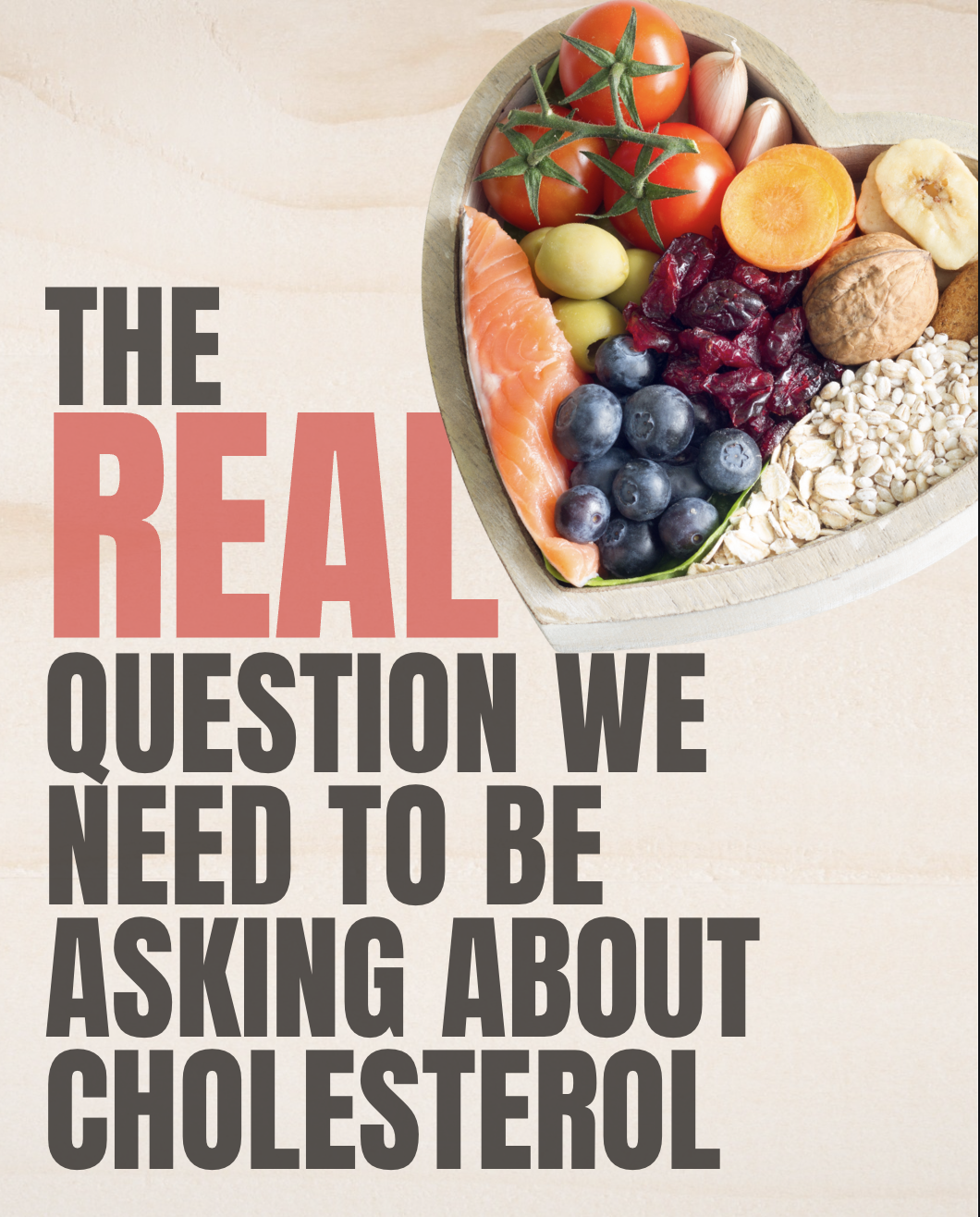
Cholesterol Is Not The Enemy
Cholesterol is a waxy, fat-like substance produced primarily by the liver, with a smaller portion coming from the foods you eat. Every cell in your body depends on it. It forms the structural backbone of cell membranes, gives them the fluidity and flexibility they need to function, and acts as a precursor for some of the most important molecules in the body, including vitamin D, bile acids for digestion, and all of your major steroid hormones.
Without cholesterol, your body simply could not work. This is why the liver regulates its production so tightly, increasing output when dietary intake drops and scaling back when intake rises. It's a highly adaptive system, not a passive accumulation of a harmful substance.
The cholesterol in your bloodstream travels in carrier molecules called lipoproteins, and it's here that the nuance begins. LDL (low-density lipoprotein) carries cholesterol from the liver out to the tissues. HDL (high-density lipoprotein) helps return it to the liver for recycling or excretion. Triglycerides, another key marker, reflect how the body is handling dietary carbohydrates and fats, and elevated levels are increasingly understood as a meaningful signal of metabolic stress.
When Cholesterol Runs High
Elevated LDL cholesterol, particularly when accompanied by small, dense LDL particles, low HDL, and high triglycerides, can contribute to a pattern of cardiovascular risk. This is well-established in the research. But context matters enormously. A person with high LDL, optimal HDL, low triglycerides, no insulin resistance, no inflammation, and no family history sits in a very different risk category than someone whose LDL is only moderately elevated alongside all of those other markers.
Functional and integrative medicine tends to look beyond a standard lipid panel toward a more complete cardiovascular picture, including markers like apolipoprotein B (ApoB), lipoprotein(a), hsCRP for inflammation, fasting insulin, and advanced lipoprotein particle sizing. These tools allow for a far more individualized assessment of risk rather than treating a single number in isolation.
Not all LDL is created equal. Research suggests that small, dense LDL particles are more atherogenic than large, buoyant ones. Standard lipid panels typically measure LDL cholesterol concentration, not particle number or size. Advanced lipid testing can provide a clearer picture of actual cardiovascular risk.
Elevated cholesterol is also not always a primary problem. In many cases, it reflects an underlying driver: poor metabolic health, thyroid dysfunction, insulin resistance, chronic inflammation, or inadequate sleep. Addressing those root causes often shifts the lipid picture meaningfully, which is one reason why a systems-based approach can be so valuable in this area.

When Cholesterol Runs Low
This side of the conversation receives far less attention, but it matters. Cholesterol that falls below optimal thresholds can affect hormone production, cognitive function, mood, and cellular repair. Very low total cholesterol has been associated in some research with increased risk of depression, anxiety, and all-cause mortality, though the relationship is complex and context-dependent.
The brain is particularly relevant here. The nervous system contains roughly 25 percent of the body's total cholesterol, where it supports the myelin sheaths around neurons, facilitates synaptic signaling, and contributes to the production of neurosteroids that regulate mood and stress response. This is not an argument against treating cardiovascular risk when it's genuinely present. It is an argument for treating the whole picture, not just the number.
Cholesterol As The Foundation Of Your Hormone System
This is arguably where cholesterol's importance is most underappreciated in clinical practice. Every single steroid hormone in the human body, including cortisol, DHEA, testosterone, estrogen, progesterone, aldosterone, and pregnenolone, is synthesized directly from cholesterol. The pathway begins with cholesterol being converted to pregnenolone inside the mitochondria, and from there, the body routes it toward whichever hormones are most needed at that time.
This has meaningful implications for anyone managing chronic stress, adrenal fatigue patterns, low libido, mood instability, or hormonal imbalances of any kind. When the body is under sustained stress and cortisol demand is high, it will prioritize that pathway, potentially at the expense of sex hormone production. Clinically, this dynamic is sometimes called cortisol steal or pregnenolone steal, and while the terminology is debated, the underlying principle that chronic stress competes with sex hormone synthesis is biochemically supported.
When dietary fat intake is very low, when cholesterol-lowering medications are used aggressively, or when the liver is not producing adequate cholesterol due to other imbalances, hormone production can be affected. This is one reason why a blanket "lower is always better" approach to cholesterol management does not serve everyone equally.
Cholesterol During Perimenopause
For women in their late thirties through fifties, understanding the relationship between cholesterol and hormones becomes especially relevant. During perimenopause, estrogen levels begin to fluctuate and decline, and this has a direct effect on lipid metabolism. Estrogen plays a meaningful role in how the liver processes LDL cholesterol, influencing both LDL receptor activity and HDL levels. As estrogen falls, it is common to see LDL rise, HDL decrease, and triglycerides increase, sometimes quite noticeably even without major changes in diet or lifestyle.
This shift is a physiological transition, and it means that lipid panels interpreted without hormonal context can lead to unnecessary alarm or premature pharmacological intervention. Understanding where a woman is in her hormonal transition is an important part of interpreting her cardiovascular markers accurately.
Research published in the Journal of the American Heart Association has documented that the perimenopausal period is associated with accelerated changes in cardiovascular risk factors, including shifts in LDL, HDL, and triglycerides. Addressing inflammation, metabolic health, sleep quality, and hormonal balance as part of an integrated approach may support a more favorable cardiovascular picture during this transition.
Progesterone, another hormone that begins to decline early in perimenopause, also plays a protective cardiovascular role. Supporting the broader hormonal ecosystem through nutrition, stress management, sleep, and where appropriate, clinical intervention, is part of a thoughtful approach to long-term heart health for women at this life stage.
Why Fiber Matters
Of all the dietary tools for supporting healthy cholesterol levels, soluble fibre remains one of the most consistently supported in the research literature. Soluble fibre, found in foods like oats, legumes, flaxseed, psyllium husk, apples, and pears, forms a gel-like substance in the digestive tract that binds to bile acids. Because bile acids are made from cholesterol, when they are bound and excreted rather than reabsorbed, the liver must pull more cholesterol from the bloodstream to make new ones, which can meaningfully reduce circulating LDL levels over time.
Beyond its direct effect on LDL, fibre supports the gut microbiome, reduces post-meal blood sugar spikes, lowers triglycerides, and decreases systemic inflammation, all factors that feed into the broader cardiovascular and metabolic picture.
The typical Western diet contains roughly half the fibre recommended for optimal health, and closing that gap is one of the highest-yield nutritional changes most people can make.
Aiming for 25 to 35 grams of fibre daily, with a meaningful proportion coming from soluble sources, is a well-supported target. Getting there gradually, alongside adequate hydration, helps the digestive system adjust comfortably.
Your Cholesterol Story Is Bigger Than One Number
Cholesterol is not a problem to be eliminated. It is a molecule your body produces with intention, uses with precision, and adjusts in response to everything from what you eat to how much sleep you get to where you are in your hormonal life. When something shifts in your lipid panel, the most useful question isn't "how do we lower this number" but rather "what is this telling us about the system as a whole?"
For women navigating perimenopause, for anyone managing chronic stress or hormonal imbalance, or for those who simply want to understand their cardiovascular health more deeply, that systems-level lens changes everything. It moves the conversation from reactive to proactive, from a single marker to the full picture, and from a number to a person.
Ready to go deeper?
If you've been told your numbers are "fine" but you still don't feel well, or if you have questions that a standard lipid panel hasn't answered, we'd love to help you look at the full picture.
References
Grundy SM, et al. (2018). 2018 AHA/ACC Guideline on the Management of Blood Cholesterol. Journal of the American College of Cardiology, 73(24), e285–e350.
Mora S, et al. (2009). LDL particle subclasses, LDL particle size, and carotid atherosclerosis in the Multi-Ethnic Study of Atherosclerosis. Atherosclerosis, 192(1), 211–217.
El Khoudary SR, et al. (2020). Menopause Transition and Cardiovascular Disease Risk: Implications for Timing of Early Prevention. Journal of the American Heart Association, 9(22), e016687.
Dietschy JM, Turley SD. (2004). Cholesterol metabolism in the central nervous system during early development and in the mature animal. Journal of Lipid Research, 45(8), 1375–1397.
Brown L, et al. (1999). Cholesterol-lowering effects of dietary fiber: a meta-analysis. The American Journal of Clinical Nutrition, 69(1), 30–42.